

Research Agenda
What we study, and the principles that guide our work
Our research examines how people experience and learn science, how chemistry is taught, and how educational research shapes what we understand about students and their experiences. Although our projects take place in different educational settings and use different methods, they are connected by questions about learning, identity, curriculum, and the role of educational institutions.
Four principles guide this work. They shape the questions we ask, the methods we use, and how we understand the relationship between research and educational practice.
Equity and justice shape the questions we ask
Equity is not something we add to a study after the research design is complete. It influences which questions we consider important, whose experiences we study, and how we interpret what we find. We examine how educational practices and institutional conditions shape students’ opportunities to participate in and learn science.
Research and practice inform one another
We study teaching and learning in the settings where they take place. This means working with instructors and other educational partners, attending to the realities of classrooms and departments, and considering how research findings can inform instructional practice. We are interested in approaches that are meaningful to educators and feasible to sustain beyond an individual study.
Research methods shape what we can know
The methods used to study science education influence which experiences become visible and how findings are interpreted. We make deliberate choices about research design, measurement, and analysis while examining the assumptions built into those choices. We also consider whose knowledge and experiences are represented, and whose may be overlooked.
We study how and why learning happens
Understanding whether an instructional approach is associated with particular outcomes is only part of the work. We also want to understand what happens as students engage with scientific ideas, how instructors facilitate that engagement, and what features of an educational environment contribute to students’ experiences. Studying these processes helps us understand why an approach may work in one setting and what might need to change in another.
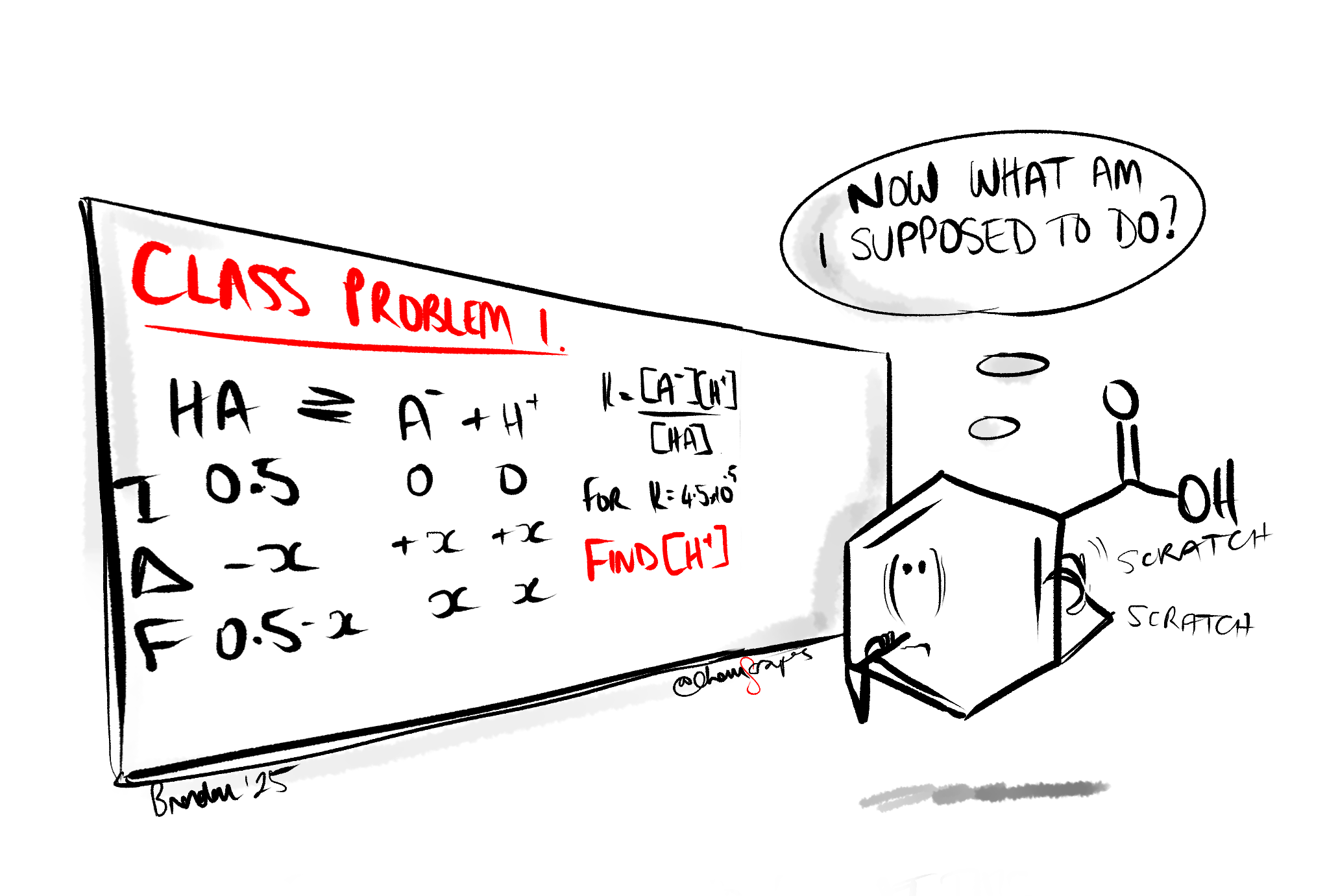
What does it mean to serve students through the way we teach science?
New Mexico State University is a Hispanic-Serving Institution. This context informs our research, including our interest in the educational experiences of Latine students and the ways chemistry education can recognize and build on the knowledge students bring to the classroom.
Servingness scholarship has identified curriculum and pedagogy as important dimensions of how institutions serve their students. We are interested in examining what these commitments look like in the teaching and learning of specific STEM disciplines. In chemistry, this means asking how students encounter scientific ideas, whose knowledge and experiences are taken up in the curriculum, and how instructional practices shape opportunities to participate and learn.
This work also connects with research on cultural and epistemological border crossing. Students may move among different ways of communicating, reasoning, and making sense of the world as they engage with science. We are interested in how these transitions take place in chemistry classrooms, how students draw on linguistic and cultural resources in their reasoning, and how teaching practices can recognize and support these resources.
The long-term goal is to contribute empirical evidence and practical knowledge that can inform how chemistry is taught and how introductory chemistry curricula are designed, implemented, and evaluated.
Research Projects
POGIL in Recitations
This project examines how guided inquiry works in general chemistry recitations, studied across a phased rollout through the foundational chemistry sequence. We look at how teamwork, scaffolded inquiry, and instructor facilitation relate to student engagement, and at how graduate teaching assistants develop as facilitators. Because the rollout spans several courses, we can also examine how repeated exposure relates to students’ persistence through the sequence.
Participatory Belonging
This work takes place at a university-affiliated laboratory preschool, where young children and their families engage with science together. Using 3D-printed models drawn from local desert ecology, we examine how a learning environment can be designed so that children — including neurodivergent children and children from bilingual households — participate in science and come to see it as something they belong in.
Measuring Community Cultural Wealth
Community cultural wealth describes the knowledge, language, aspirations, and networks students bring from their families and communities. This project examines how those resources can be identified and measured in science education research, and what existing instruments miss. It connects our interest in students’ experiences with our methodological work on measurement and interpretation.
Mentorship and Science Norms
Mentor relationships carry messages about what science is and who belongs in it. This project studies what first-generation college students take from those relationships: the norms they come to perceive, how those norms sit alongside other parts of who they are, and what that means for whether they stay on a science path or leave it. The work follows students across three universities and draws on both ethnographic and quantitative approaches.